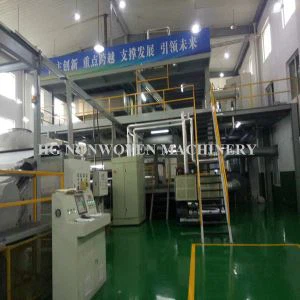
As a supplier of nonwoven for geotextile, I often get asked about the elongation at break of our products. Elongation at break is a crucial property that determines how well a nonwoven geotextile can withstand stretching before it fails. In this blog post, I'll delve into what elongation at break means, why it's important for geotextiles, and how it relates to our range of Non Woven Fabric For Geotextile 100g 200g 300g 400g 500g.


Understanding Elongation at Break
Elongation at break, also known as ultimate elongation, is a measure of the maximum amount of stretching a material can undergo before it breaks. It is expressed as a percentage of the original length of the specimen. For example, if a nonwoven geotextile specimen with an original length of 100 mm stretches to 150 mm before breaking, its elongation at break is 50%.
This property is determined through a tensile test, where a sample of the nonwoven fabric is clamped at both ends and gradually pulled until it ruptures. During the test, the force applied and the corresponding elongation are measured. The data obtained is then used to calculate the elongation at break and other mechanical properties such as tensile strength.
Importance of Elongation at Break in Geotextiles
Geotextiles are used in a wide range of civil engineering applications, including soil stabilization, erosion control, drainage, and separation. In these applications, the nonwoven fabric is subjected to various types of stresses, such as tensile, compressive, and shear forces. The elongation at break of the geotextile plays a vital role in its performance and durability.
- Soil Stabilization: In soil stabilization projects, geotextiles are used to reinforce the soil and prevent it from shifting or eroding. A geotextile with a high elongation at break can accommodate the movement of the soil without breaking, ensuring long-term stability. For example, in a slope stabilization project, the geotextile needs to stretch as the soil settles and consolidates over time. If the elongation at break is too low, the geotextile may rupture, leading to failure of the stabilization system.
- Erosion Control: Geotextiles are also used to control erosion along riverbanks, shorelines, and other areas prone to soil loss. When used as a erosion control blanket, the geotextile must be able to withstand the forces of water flow and wave action. A high elongation at break allows the fabric to conform to the irregular surface of the soil and absorb the energy of the flowing water, preventing it from washing away the soil.
- Drainage: In drainage applications, geotextiles are used to separate the soil from the drainage layer and prevent clogging. The geotextile needs to be flexible enough to allow water to pass through while maintaining its integrity. A nonwoven fabric with a suitable elongation at break can adapt to the shape of the drainage system and resist tearing, ensuring efficient drainage.
- Separation: Geotextiles are often used to separate different layers of soil or other materials in a construction project. For example, in a road construction project, a geotextile may be placed between the subgrade and the base course to prevent the mixing of the two layers. The elongation at break of the geotextile ensures that it can maintain its position and function even when subjected to the movement and settlement of the surrounding materials.
Factors Affecting the Elongation at Break of Nonwoven Geotextiles
The elongation at break of nonwoven geotextiles can be influenced by several factors, including the raw materials used, the manufacturing process, and the fabric structure.
- Raw Materials: The type and quality of the fibers used in the nonwoven fabric have a significant impact on its mechanical properties. Synthetic fibers such as polypropylene (PP) and polyester (PET) are commonly used in geotextiles due to their high strength, durability, and chemical resistance. PP fibers, in particular, are known for their good elongation properties, making them suitable for applications where high flexibility is required.
- Manufacturing Process: The method used to produce the nonwoven fabric also affects its elongation at break. There are several manufacturing processes available, including needle punching, thermal bonding, and chemical bonding. Needle punching is a widely used process that involves entangling the fibers together using barbed needles. This process can result in a nonwoven fabric with a relatively high elongation at break. Thermal bonding, on the other hand, involves heating the fibers to a temperature where they melt and fuse together. This process can produce a fabric with a more uniform structure and higher tensile strength but may have a lower elongation at break.
- Fabric Structure: The structure of the nonwoven fabric, such as its thickness, density, and fiber orientation, can also influence its elongation at break. A thicker and denser fabric generally has a higher tensile strength but may have a lower elongation at break. Similarly, a fabric with a more random fiber orientation may have better elongation properties compared to one with a more aligned fiber structure.
Our Nonwoven Geotextiles and Elongation at Break
At our company, we offer a wide range of nonwoven geotextiles with different weights and properties to meet the diverse needs of our customers. Our Non Woven Fabric For Geotextile 100g 200g 300g 400g 500g are made from high-quality polypropylene fibers using the needle punching process. This ensures that our geotextiles have excellent mechanical properties, including a high elongation at break.
The elongation at break of our nonwoven geotextiles varies depending on the weight and specific application requirements. Generally, our lighter weight fabrics (100g - 200g) have a higher elongation at break compared to the heavier weight fabrics (300g - 500g). This is because the lighter fabrics are more flexible and can stretch more easily before breaking. However, all our geotextiles are designed to meet or exceed the industry standards for elongation at break, ensuring reliable performance in various civil engineering applications.
Conclusion
The elongation at break is a critical property of nonwoven geotextiles that determines their ability to withstand stretching and deformation without breaking. In geotextile applications, a high elongation at break is essential for ensuring the long-term performance and durability of the product. At our company, we understand the importance of this property and strive to provide our customers with nonwoven geotextiles that offer excellent elongation characteristics.
If you are looking for high-quality nonwoven geotextiles for your next project, we invite you to contact us for more information. Our team of experts will be happy to assist you in selecting the right product for your specific needs and provide you with a competitive quote. Let's work together to achieve your civil engineering goals.
References
- ASTM D4595 - Standard Test Method for Tensile Properties of Geotextiles by the Wide - Width Strip Method
- ISO 10319:2012 - Geosynthetics — Determination of tensile properties of geotextiles and geotextile - related products by the wide - width strip method
- Koerner, R. M. (2012). Designing with Geosynthetics. Pearson Education.