

As a supplier of nonwoven for medical use, I've had the privilege of witnessing firsthand the critical role these materials play in the healthcare industry. One of the most important characteristics that often gets overlooked is the heat resistance property of medical nonwoven. In this blog post, I'll delve into what heat resistance means for medical nonwoven, why it's crucial, and how it impacts various medical applications.
Understanding Heat Resistance in Medical Nonwoven
Heat resistance in nonwoven materials refers to their ability to withstand elevated temperatures without significant degradation in physical or chemical properties. For medical nonwoven, this can involve resistance to the heat generated during sterilization processes, exposure to high - temperature environments in storage or use, and even the heat associated with certain medical procedures.
Medical nonwoven is commonly made from polypropylene (PP), which has inherent heat - resistant properties to a certain degree. PP nonwoven can typically withstand temperatures up to around 120 - 130°C without melting or losing its structural integrity. This is important because many medical devices and products need to be sterilized to ensure they are free from harmful microorganisms.
Importance of Heat Resistance in Medical Applications
Sterilization Processes
One of the primary reasons for the need for heat - resistant medical nonwoven is sterilization. Autoclaving is a widely used sterilization method that involves subjecting medical products to high - pressure steam at temperatures around 121 - 134°C for a specific period. Nonwoven materials used in medical gowns, drapes, and packaging must be able to withstand these high temperatures without melting, shrinking, or losing their barrier properties.
For example, our 45gsm SMS Non Woven Fabric For Isolation Gowns is designed to endure autoclaving. The SMS (Spunbond - Meltblown - Spunbond) structure provides not only excellent barrier protection against fluids and microorganisms but also sufficient heat resistance to maintain its integrity during the sterilization process. This ensures that the isolation gowns remain effective in protecting healthcare workers from potential infections.
Storage and Transportation
Medical nonwoven products may be exposed to high temperatures during storage and transportation. In some regions, warehouses and shipping containers can reach elevated temperatures, especially in hot climates. Heat - resistant nonwoven materials can prevent premature degradation, such as embrittlement or loss of strength, which could compromise the quality and performance of the medical products.
Medical Procedures
Certain medical procedures generate heat. For instance, in some surgical procedures, electrocautery devices are used, which can produce high - temperature sparks. Nonwoven drapes used in these procedures need to have adequate heat resistance to prevent ignition and protect the patient and the surgical team.
Factors Affecting Heat Resistance of Medical Nonwoven
Fiber Composition
As mentioned earlier, polypropylene is a common material for medical nonwoven due to its relatively good heat - resistant properties. However, the type of polypropylene, its molecular weight, and the presence of additives can all affect heat resistance. Higher - molecular - weight polypropylene generally has better heat resistance as it has stronger intermolecular forces.
Additives such as heat stabilizers can be incorporated into the nonwoven during the manufacturing process to enhance its heat - resistant capabilities. These stabilizers can prevent oxidation and degradation of the polymer chains at high temperatures.

Nonwoven Structure
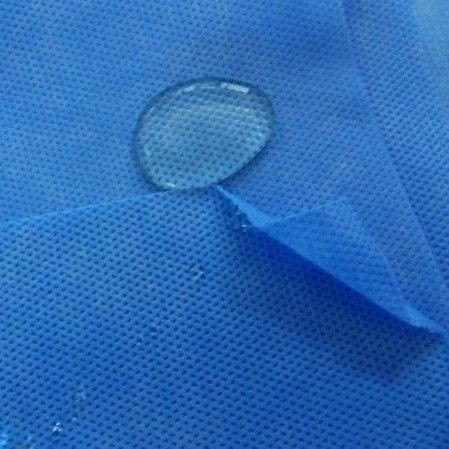
The structure of the nonwoven fabric also plays a role in heat resistance. SMS nonwoven, for example, has a multi - layer structure. The spunbond layers provide strength and durability, while the meltblown layer offers excellent filtration and barrier properties. This structure can help distribute heat more evenly across the fabric, reducing the risk of localized melting or damage.
Testing Heat Resistance of Medical Nonwoven
To ensure the quality and performance of medical nonwoven in terms of heat resistance, various testing methods are employed. One common test is the thermal gravimetric analysis (TGA), which measures the weight loss of a sample as it is heated at a controlled rate. This can help determine the temperature at which the nonwoven starts to decompose.
Another test is the differential scanning calorimetry (DSC), which measures the heat flow associated with physical and chemical changes in the nonwoven as a function of temperature. DSC can provide information about the melting point, crystallization behavior, and thermal transitions of the nonwoven material.
Our Product Range and Heat Resistance
We offer a wide range of medical nonwoven products with excellent heat - resistant properties. Our 25gsm 175mm Pp Spunbond Nonwoven Fabric For Face Mask is made from high - quality polypropylene and can withstand the heat generated during the mask manufacturing process, as well as the typical sterilization methods used for face masks.
Our 45gsm SMS Spunbond Non Woven Fabric 100% PP is another product that showcases our commitment to providing heat - resistant medical nonwoven. With its SMS structure and carefully selected polypropylene raw materials, it can endure the rigors of autoclaving and other high - temperature applications.
Conclusion
Heat resistance is a crucial property for medical nonwoven materials. It ensures the safety, effectiveness, and quality of medical products throughout their lifecycle, from manufacturing and sterilization to storage, transportation, and use. As a supplier of nonwoven for medical use, we are dedicated to producing high - quality materials that meet the demanding heat - resistance requirements of the healthcare industry.
If you are in the market for medical nonwoven products with excellent heat - resistant properties, we invite you to contact us for procurement and further discussions. We are ready to provide you with detailed product information, samples, and customized solutions to meet your specific needs.
References
- ASTM International. (20XX). Standard test methods for evaluating the thermal properties of nonwoven materials.
- European Committee for Standardization. (20XX). Standards for medical nonwoven materials and their heat - resistant requirements.
- Textile Research Journal. (20XX). Research on the heat - resistant properties of polypropylene nonwoven fabrics.


