


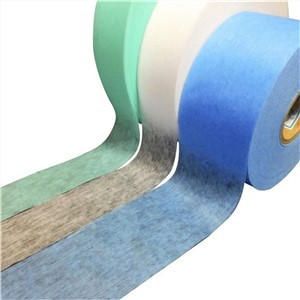
PP Nonwoven Fabric
Why Choose Us
Industry Experience
Years of experience in designing and manufacturing nonwoven machinery, offering a deep understanding of the market and client needs.
Customization Capabilities
Ability to customize machinery to suit specific production requirements and output targets.
Advanced Technology
Integration of cutting-edge technology to ensure high efficiency, productivity, and reliability in nonwoven production.
After-Sales Service
Comprehensive after-sales support, including maintenance, repairs, and spare parts provision to ensure long-term operation.




What is PP Nonwoven Fabric?
Non-woven polypropylene fabric, or the so-called PP non-woven fabric, is a non-toxic, odorless, milky white highly crystalline polymer. It is one of the lighter types of plastics, with low water absorption and good form-ability. The surface of the non-woven polypropylene fabric material has good gloss and is easy to color. Its strength, hardness, and elasticity are higher than that of high-density PE. PP non-woven fabric has good heat resistance, and their products can be sterilized at a temperature above 100°C.

How is PP Nonwoven Fabric made?
Extrusion: Polypropylene polymer pellets are melted and extruded through a spinneret, which is a device that contains numerous tiny holes.
Fiber Formation: The molten polymer is forced through the spinneret, forming thousands of tiny, continuous fibers. These fibers are cooled and solidified as they pass through a stream of cool air.
Web Formation: The fibers are collected on a conveyor belt or screen, forming a non-woven web. This web is then compressed to increase its density.
Bonding: The non-woven web is bonded together using one of several techniques, including heat, pressure, or chemicals. This creates a durable and stable fabric.
Finishing: The fabric may be further treated with various finishing processes to enhance its performance or appearance, such as by applying a coating or laminating it with other materials.

Properties and characteristics of PP Nonwoven Fabric
Durability
Non-woven polypropylene fabric is strong and durable, making it ideal for use in products that need to withstand wear and tear.
Lightweight
PP non-woven fabric is very lightweight, making it easy to handle and work with.
Water resistance
Polypropylene fabric has excellent water resistance, which makes it useful for applications that require protection from moisture.
Breathability
PP non-woven fabric is breathable, allowing air and moisture to pass through, which makes it ideal for use in products that need to allow for air flow.
Chemical resistance
Non-woven polypropylene fabric is resistant to many chemicals, making it a good choice for use in industrial settings.
Low cost
PP non-woven fabric is relatively inexpensive compared to other materials, making it a popular choice for a variety of applications.
Eco-friendliness
Non-woven polypropylene fabric is recyclable and can be reused, making it an eco-friendly option for products that need to be disposable or used for a short period of time.
Versatility
PP non-woven fabric can be used in a wide variety of applications, including in medical products, agriculture, construction, and packaging.


Applications of PP Nonwoven Fabric in various industries
Medical industry
Non-woven polypropylene fabric is widely used in the medical industry for products such as surgical gowns, masks, drapes, and other medical supplies.
Agriculture industry
PP non-woven fabric is used in the agriculture industry for products such as crop covers, weed control fabric, and plant protection.
Construction industry
Non-woven polypropylene fabric is used in the construction industry for products such as house wrap, roofing underlayment, and geotextiles.
Automotive industry
PP non-woven fabric is used in the automotive industry for products such as car seat covers, floor mats, and trunk liners.
Packaging industry
Non-woven polypropylene fabric is used in the packaging industry for products such as shopping bags, gift bags, and food packaging.
Furniture industry
PP non-woven fabric is used in the furniture industry for products such as upholstery, cushioning, and bedding.
Filtration industry
Non-woven polypropylene fabric is used in the filtration industry for products such as air filters, water filters, and oil filters.
Geotextile industry
PP non-woven fabric is used in the geotextile industry for products such as erosion control, land reclamation, and drainage systems.
Advantages of PP Nonwoven Fabric
Light weight: Polypropylene resin is used as the main raw material, with a specific gravity of only 0.9, only three-fifths of cotton, with fluffy and good hand feeling.
Soft: It consists of fine fibers (2-3D) and is formed by light point-like hot melt bonding. The finished product is moderately soft and comfortable.
Water repellency and breathability: Polypropylene chips do not absorb water, have zero moisture content, and the finished product has good water repellency. It is composed of 100% fiber, which is porous and has good air permeability. It is easy to keep the cloth surface dry and easy to wash.
It can purify the air and use the advantages of small holes to keep bacteria and viruses out.
Non-toxic and non-irritating: The product is produced with FDA-compliant food-grade raw materials, does not contain other chemical ingredients, has stable performance, is non-toxic, has no peculiar smell, and does not irritate the skin.
Antibacterial and anti-chemical agents: Polypropylene is a chemically passive substance, not moth-eaten, and can isolate the erosion of bacteria and insects in the liquid; antibacterial, alkali corrosion, and finished products do not affect the strength due to erosion.
Antibacterial. The product is water-repellent, not moldy, and can isolate the erosion of bacteria and insects in the liquid, and is not moldy.
Good physical properties. It is made of polypropylene spun directly into a mesh and thermally bonded. The strength of the product is better than that of the general staple fiber product, the strength is non-directional, and the vertical and horizontal strengths are similar.
In terms of environmental protection, the raw material of most non-woven fabrics used is polypropylene, while the raw material of plastic bags is polyethylene. Although the two substances have similar names, they are quite different in chemical structure. The chemical molecular structure of polyethylene is quite stable and extremely difficult to degrade, so it takes 300 years for plastic bags to decompose; while the chemical structure of polypropylene is not strong, the molecular chain can be easily broken, so that it can be effectively degraded , and enter the next environmental cycle in a non-toxic form, a non-woven shopping bag can be completely decomposed within 90 days. Moreover, non-woven shopping bags can be reused more than 10 times, and the pollution to the environment after disposal is only 10% of that of plastic bags.
Recyclability of PP Nonwoven Fabric
Quality of the material
The quality of the polypropylene material affects its recyclability. If the material is contaminated with other materials or has been exposed to heat or UV light, it may not be suitable for recycling.
Intended use
The intended use of the polypropylene material also affects its recyclability. If the material has been used for food or medical applications, it may need to be separated from other materials before it can be recycled.
Recycling process
The recycling process for polypropylene involves melting the material and reforming it into new products. The recycling process can be affected by the quality of the material and the equipment used.
Availability of recycling facilities
The availability of recycling facilities also affects the recyclability of polypropylene. If there are no recycling facilities nearby, it may not be economical or feasible to recycle the material.
Types of PP Nonwoven Fabric
Spunbond Non-woven Fabric: This is a strong and durable fabric that is made by extruding continuous filaments of synthetic polymer. It is commonly used in the construction industry, as well as in agriculture, medical, and hygiene products.
Meltblown Non-woven Fabric: This fabric is made by extruding melted polymer through small nozzles to create fibers that are then bonded together. It is used in filtration systems, as well as in medical and hygiene products.
Needle-punched Non-woven Fabric: This fabric is made by mechanically interlocking fibers using barbed needles. It is used in geotextiles, as well as in insulation and filtration systems.
Spunlace Non-woven Fabric: This fabric is made by using high-pressure water jets to entangle fibers. It is commonly used in wipes and towels.
Airlaid Non-woven Fabric: This fabric is made by using air to form a web of fibers, which are then bonded together using heat or pressure. It is commonly used in hygiene products, as well as in tabletop and kitchen products.
Wet-laid Non-woven Fabric: This fabric is made by suspending fibers in water and then bonding them together using a binder. It is commonly used in filtration systems, as well as in industrial wipes and hygiene products.

PP Nonwoven Fabric Market Overview
PP nonwoven fabric is a thermoplastic material with excellent comprehensive performance; moreover, it is small in density, easy to produce and has low production costs. However, it also has some defects, such as a low melting point, low thermal deformation temperature, poor creep-resistant performance, poor dimensional stability, low temperature brittleness, etc.
On the other hand, PP nonwoven fabric itself is resistant to erosion by mildew, but it cannot directly kill it. Furthermore, its side-chain polymers have flexible molecule chains and are non-polar, with the latter attribute making it difficult to blend with other polymers, and the weak molecule combination making its heat resistance poor. Thus, in order to expand the functions of PP nonwoven fabrics, it is necessary to modify and process it.
For industry structure analysis, the PP non-woven fabric industry is highly fragmented. A variety of manufacturers ranging from large multinational corporations to small privately owned companies compete in this industry. The top eight producers account for less than 40% of the market. Regionally, China is the biggest production area of PP non-woven fabric, also the leader in the whole nonwoven industry. Europe and USA also produce large amount of PP non-woven fabric per year.
For forecast, the global PP nonwoven industry would keep increasing with annual growth rate with 5.7%, and a little higher speed in China. We tend to believe this industry now is close to mature, and the demand increasing degree will show a smooth curve. On product prices, the slow downward trend in recent years will maintain in the future, as competition intensifies, prices gap between different brands will go narrowing. Similarly, there will be fluctuation in gross margin.

Six properties of PP Nonwoven Fabric
Physical properties
PP non-woven fabric is a non-toxic and tasteless milky white high crystalline polymer. It is one of the lightest varieties of all plastics at present. It is particularly stable to water. The water absorption in water for 14h is only 0.01%. The molecular weight is about 80000~150000, with good formability. However, due to the large shrinkage, the original wall products are easy to sag, the surface luster of the products is good and easy to color.
Mechanical properties
PP non-woven fabric has high crystallinity and regular structure, so it has excellent mechanical properties. Its strength, hardness and elasticity are higher than high-density PE(HDPE).The outstanding feature is bending fatigue resistance (7) x The folding of 10 ^ 7) times opening and closing is bent without damage trace. The dry friction coefficient is similar to that of nylon, but it is not as good as nylon under oil lubrication.
Thermal performance
PP non-woven fabric has good heat resistance, the melting point is 164~ 170 ℃, and the products can be sterilized at a temperature above 100 C. It will not deform at 150 ℃ without external force. The embrittlement temperature is - 35 ℃, embrittlement will occur below - 35 ℃, and the heat resistance is not as good as PE.
Chemical stability
PP non-woven fabric has good chemical stability. In addition to being eroded by acid, it is relatively stable to other chemical reagents, but low molecular weight aliphatic hydrocarbons and aromatic hydrocarbons can soften and swell PP non-woven fabric. The chemical stability is also improved with the increase of crystallinity.Therefore, PP non-woven fabric is suitable for making Russian Chinese chemical pipelines and accessories with good anti-corrosion effect.
Electrical performance
The high-frequency insulation performance of non-woven fabric is excellent. Because it hardly absorbs water, the insulation performance is not affected by humidity. It has a high dielectric coefficient. With the rise of temperature, it can be used to make heated electrical insulation products. The breakdown voltage is also very high. It is suitable for electrical accessories, etc. Good voltage and arc resistance, but high static electricity, easy to aging in contact with copper.
Weather resistance
Non woven fabric is very sensitive to ultraviolet light. Adding zinc oxide, lauryl thiopropionate and carbon black similar milky white filler can improve its aging resistance.
Certifications

Our Factory
Our production line focus on producing high performance eco-friendly and biodegradable nonwoven fabric materials.we are one of reliable nonwoven machine supplier in china and have been doing so far 10 years more.
