


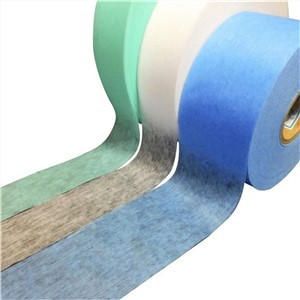
Nonwoven For Hygiene
we produce nonwoven fabric for baby diaper, adult diaper,female hygiene use.
Why Choose Us
Industry Experience
Years of experience in designing and manufacturing nonwoven machinery, offering a deep understanding of the market and client needs.
Customization Capabilities
Ability to customize machinery to suit specific production requirements and output targets.
Advanced Technology
Integration of cutting-edge technology to ensure high efficiency, productivity, and reliability in nonwoven production.
After-Sales Service
Comprehensive after-sales support, including maintenance, repairs, and spare parts provision to ensure long-term operation.




What is Nonwoven For Hygiene?
PP Nonwoven Fabric, short for Polypropylene Nonwoven Fabric, is a type of engineered fabric made from polypropylene fibers. These fibers are bonded together using various techniques to create a fabric that is strong, durable, and lightweight. PP Nonwoven Fabric has a wide range of applications, including medical products, hygiene products, automotive parts, construction materials, and more.
Advantages of Nonwoven For Hygiene
Soft quality of the fabric
Non woven fabric is known for its high softness. As it is made up of fine fibers, the finished product that is created is soft and comfortable. This feature makes it a widely-used fabric in the fashion domain. Some of the specific types of nonwoven fabrics, such as spunlace fabric, are so gentle to the skin that they have high utility in skin care products like facial masks and wet wipes. The materials that are used in the preparation of non woven fabrics are instrumental in ensuring their softness.
Breathable quality
One of the main highlights of non woven fabric is the high breathability. The porous nature of the fiber enhances the circulation of air. This makes it easy to wash and dry the fabric in no time. The fabrics that are made of Polyethylene film (PE), as well as Polypropylene, spun bonds are known to allow air to pass, which enhances the comfort level. The high breathability of the fabric enhances its applicability as it can be commonly used for making gloves, aprons, and caps. Furthermore, the water-repellant nature of the fiber can be kept dry and free from unnecessary moisture content.
Acts as a vital bacterial barrier
The presence of bacteria is regarded to be one of the major issues while using fabrics. However, while using non woven fabric, there is no risk of the presence of bacterial agents. Polypropylene, which is used for making the fabric, is known to be a chemically passive material. This feature eliminates the possibility of attack by bacteria or insects. As the fabric is immune to such harmful elements, its strength is not compromised in any way. The non-moldy and water-removing attributes of the fiber enhance its safety and make it a useful material that is used in hospitals.
Robust physical properties
One of the key highlights of any fiber relates to its innate properties. The property of a non woven fabric is what makes it versatile and unique in its own rights. As the fabric is made by entangling filaments or fiber, it is much stronger as compared to other standard staple fibers. The strength of the fiber is non-directional in nature, implying that the strength is similar in both horizontal and vertical directions.
Sustainability dimension
A vital advantage of using non woven fabric is related to the sustainable and eco-friendly nature of the material. For most non woven fabrics, the raw material that is utilized is Polypropylene. As the chemical structure of the substance is not very stable, it can easily be decomposed and degenerated. So even if the fabric is used in abundance, it can enter the next stage of the environmental cycle without giving rise to any toxic implications. A shopping bag that is made using non woven fabric can be entirely composed within three months without adversely affecting the environment.
Application of Nonwoven For Hygiene
Medical
Spunbond nonwoven fabric has taken a plunge amidst the pandemic. It is used in the manufacturing of various medical items like gloves, masks, surgical gowns, surgical drapes, bandages, medical packaging, plasters, disposable clothing, surgical scrubs, bath wipes, shoe covers, cleanroom wipes, and so on. For now, the most important application is disposable face masks.
Geo-textile and Construction
Non-woven geotextile fabric is the latest addition to the list. It has emerged in recent years only. It can be used in numerous construction processes like erosion control, soil stabilization, canal construction, drainage system, landfill lining, and even plant potting. Non-woven geotextile is a growing industry and is the future of non-woven fabric.
Household
You may not be aware of the spunbond nonwoven items that you use every day. They're lying in the nook and corner of every household right now. You may fail to realize that even your air and water filter are made of this. Additionally, it is also used in tea or coffee bags, household wipes, laundry bags, floor wipes, cheese wraps, envelopes, and even mops.
Apparel
The non woven fabric may not be used in our everyday clothes but it serves a great significance in other apparel including industrial clothing, insulated clothing, chemical defense suits, and other types of protective gear. It is highly used in industries, nuclear power plants, and chemical labs.
Industrial
Spunbond nonwoven fabric is very useful in industrial applications. It is used in carpet backing, industrial wipes, machine stabilizers, packaging, flooring, composites, and even for machine embroidery. Since it is always produced in bulk, a non-woven fabric manufacturer gains a lot of profit from this area.
Smart Nonwoven Products
We have a smartphone, a smart TV, and even a smart car nowadays. It is no surprise that smart spunbond nonwoven products will join this list someday. The items that are likely to be manufactured out of this include alarm system embedded carpets, blast-resistant curtains, burglar-proof blinds, and other such products. The nonwoven fabric has the unique ability to resist shockwaves and absorb pressure which is effective for blast-resistant curtains.
What Istypes Of Nonwoven For Hygiene
Airlaid Nonwovens
Compared to other nonwovens technologies, airlaid has the unique ability to lay down short fibers, either 100% pulp fibers, or mixtures of pulp and short cut synthetic fibers, to form a homogeneous and continuous web. It is also possible to mix in superabsorbent powders or fibers thereby creating highly absorbent webs.
Air Through Bonding (Thermal Bonding)
Through air bonding is a type of thermal bonding that involves the application of heated air to the surface of the nonwoven fabric. During the through air bonding process, heated air flows through holes in a plenum above the nonwoven material. Unlike hot ovens, which push air through the material, the through air process uses negative pressure of suction to pull the air through an open conveyor apron holding nonwoven as it is drawn through the oven. Pulling air through the material allows the rapid and even transmission of heat to minimize distortion of the nonwoven material.
Meltblown
Meltblown nonwovens are produced by extruding melted polymer fibers through a spin net or die consisting of up to 40 holes per inch to form long thin fibers which are stretched and cooled by passing hot air over the fibers as they fall from the die. The resultant web is collected into rolls and subsequently converted to finished products. The extremely fine fibers (typically polypropylene) differ from other extrusions, particularly spunbond, in that they have low intrinsic strength but much smaller size offering key properties. Meltblown nonwovens can benefit from extremely fine fibers and are often used in respirators, face masks and filtration media. Often meltblown is added to spun bond to form SM or SMS webs, which are used in the disposable diaper and feminine care industries.
Spunlace (Hydrotentanglement)
Spunlace (also known as hydroentanglement) is a bonding process for wet or dry fibrous webs made by either carding, airlaying or wet-laying, the resulting bonded fabric being a nonwoven. This process uses fine, high pressure jets of water which penetrate the web, hit the conveyor belt (or “wire” as in papermaking conveyor) and bounce back causing the fibers to entangle.
Spunlace non woven fabrics used short staple fibers, the most popular is viscoseand polyester staple fibers but polypropylene and cotton are also used. Main applications for spunlace include wipes, facial sheet masks and medical products.
Spunlaid (Spunbond)
Spunlaid, also called spunbond, nonwovens are made in one continuous process. Fibers are spun and then directly dispersed into a web by deflectors or can be directed with air streams. This technique leads to faster belt speeds, and cheaper costs. Several variants of this concept are available. Polypropylene spunbonds run faster and at lower temperatures than PET spunbonds, mostly due to the difference in melting points. The polypropylene-based spunbond is widely the material of choice in hygiene products like baby diapers and feminine hygiene products as well as in medical garments. Polyester-based spunbond materials are typically used in durable nonwovens applications like roofing and construciton, automotives and geotextiles.
Spunmelt/SMS
Spunbond has been combined with melt-blown nonwovens, conforming them into a layered product called SMS (spun-melt-spun). Melt-blown nonwovens have extremely fine fiber diameters but are not strong fabrics. SMS fabrics, made completely from PP are water-repellent and fine enough to serve as disposable fabrics. Melt-blown is often used as filter media, being able to capture very fine particles. Spunlaid is bonded by either resin or thermally.
Wetlaid
In the wetlaid process, staple fibers of up to 12 mm fiber length, very often mixed with viscose or wood pulp, are suspended in water, using large tanks. Afterwards the water-fiber- or the water-pulp-dispersion is pumped and continuously deposited on a forming wire. The water is sucked off, filtered and recycled. Besides synthetic fibers, glas ceramic and carbon fibers can be processed.
What products are used for sanitary non-woven fabrics?
Diapers
A diaper is a type of underwear that allows one to defecate or urinate in a discreet manner, without the usage of a toilet. Disposable baby diapers were first introduced in the early 1960s and since then have been marked by continuous product innovations resealable tapes and elasticized waistbands. The average baby diaper comprises 35% fluff pulp, 33% SAP, 17% PP, 6% PE, 4% adhesives, 4% other, and 1% elastics.
Diaper coversheet
The nonwoven fabric that is positioned next to the skin of the wearer of a hygiene material has been given various names, including: (a) cover, (b) coversheet, (c) coverstock, (d) facing, (e) topsheet, and others. Fiber selection, processing conditions and binder considerations all are focused on the requirement for maximum absorbency of the diaper facing.
Sanitary napkins
The functions of sanitary napkins are to absorb and retain menstrual fluid, and isolate menstrual fluids from the body. Important and desired properties are: no leakage, no unaesthetic appearance or color, no odor, no noise, stay in place, comfortable to wear (thin body shape), and a high level of hygiene. The average sanitary napkin comprises 48% fluff pulp, 36% PE, PP and PET, 7% adhesives, 6% superabsorbent and 3% release paper.
Panty shields
The function of panty shields is to protect underwear from vaginal discharge. Important and desired properties are sufficient absorption capacity, discretion, comfortable to wear (softness, body shape), and good hygiene. Pads and panty liners are mainly made of materials such as wood pulp, nonwoven fabrics made from polymers and adhesives of natural and synthetic resins.
Tampons
The most common type of tampon in daily use is a disposable plug that is designed to be inserted into the vagina during menstruation to absorb the flow of blood. Its function is to absorb and retain menstrual fluid inside the body. Important and desired properties are no leakage, no odor, easy to insert, easy to remove, softness, comfortable to wear (dimensionally correct), high level of hygiene; the tampon should also be discreet. Modern tampons are mainly composed of cellulosic absorbent material, either viscose rayon or a mixture of these fibers.
Certifications

Our Factory
Our production line focus on producing high performance eco-friendly and biodegradable nonwoven fabric materials.we are one of reliable nonwoven machine supplier in china and have been doing so far 10 years more.
