

Hey there! As a supplier of Pp Nonwoven Machines, I often get asked about the vibration levels during operation. It's a crucial aspect that can impact the machine's performance, the quality of the nonwoven fabric produced, and even the overall working environment. So, let's dive into what the vibration level of a Pp Nonwoven Machine during operation really means.
Understanding Vibration in Pp Nonwoven Machines
First off, what exactly causes vibration in these machines? Well, a Pp Nonwoven Machine is a complex piece of equipment with multiple moving parts. Motors, gears, rollers, and other components are all in constant motion to process polypropylene into nonwoven fabric. The interaction between these moving parts, along with the forces involved in the production process, can lead to vibration.
For instance, the high - speed rotation of the spinnerets, which extrude the molten polypropylene into fibers, can generate significant vibrations. Also, the tension control mechanisms that ensure the proper movement of the fabric web can cause vibrations if not adjusted correctly.

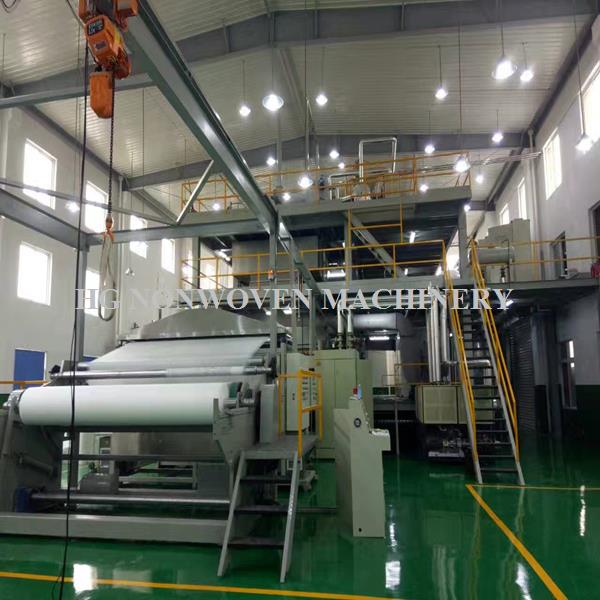
Why Vibration Level Matters
The vibration level of a Pp Nonwoven Machine is not just a technical detail; it has several real - world implications.
Impact on Product Quality
Excessive vibration can lead to uneven fiber distribution in the nonwoven fabric. This, in turn, affects the fabric's uniformity, strength, and appearance. If the vibration is too high, the fibers may not bond properly, resulting in a weak and low - quality product. On the contrary, a well - controlled vibration level ensures that the fibers are laid down evenly, leading to a high - quality nonwoven fabric.
Machine Wear and Tear
High vibration levels place additional stress on the machine's components. The continuous shaking can cause premature wear of bearings, gears, and other moving parts. This leads to increased maintenance costs and reduces the machine's lifespan. By keeping the vibration level in check, we can extend the machine's working life and minimize downtime for repairs.
Operator Safety and Comfort
An overly vibrating machine can create an uncomfortable and potentially dangerous working environment. The noise generated by high - level vibrations can cause hearing damage to operators over time. Moreover, excessive vibration can make the machine unstable, increasing the risk of accidents. A Pp Nonwoven Machine with a low and stable vibration level is much safer and more comfortable for the operators to work with.
Measuring Vibration Levels
To understand the vibration level of a Pp Nonwoven Machine, we use specialized measuring devices. These devices can measure the amplitude, frequency, and acceleration of the vibrations.
The amplitude refers to the maximum displacement of the vibrating part from its equilibrium position. A higher amplitude usually indicates more severe vibrations. Frequency, on the other hand, is the number of oscillations per unit of time. Different components of the machine may vibrate at different frequencies, and analyzing these frequencies can help us identify the source of the vibration.
Acceleration is also an important parameter. It measures how quickly the velocity of the vibrating part changes. High acceleration values can cause more significant damage to the machine and the fabric being produced.
Ideal Vibration Levels
So, what are the ideal vibration levels for a Pp Nonwoven Machine? Well, it depends on various factors such as the machine's design, production speed, and the type of nonwoven fabric being produced.
In general, for a well - functioning Pp Nonwoven Machine, the vibration amplitude should be kept as low as possible. A typical acceptable range for the vibration amplitude at the main components might be in the order of a few micrometers to a few millimeters, depending on the specific part of the machine.
The frequency of the vibrations should also be within a certain range. Most modern Pp Nonwoven Machines are designed to operate at frequencies that minimize the risk of resonance, which can cause excessive vibrations. Resonance occurs when the frequency of an external force matches the natural frequency of a machine component, leading to a significant increase in vibration amplitude.
Controlling Vibration Levels
As a supplier of Pp Nonwoven Machines, we take several measures to control the vibration levels.
Machine Design
We pay close attention to the design of the machine. Using high - quality materials and precise engineering techniques, we ensure that the components fit together perfectly. For example, the alignment of the rollers and gears is crucial. Even a slight misalignment can cause vibrations. So, we use advanced manufacturing processes to achieve accurate alignments.
Balancing
Balancing the rotating parts of the machine is another important step. Unbalanced parts can cause uneven forces, leading to vibrations. We use dynamic balancing techniques to ensure that the spinnerets, motors, and other rotating components are properly balanced. This reduces the vibration levels significantly.
Vibration Dampening
We also incorporate vibration - dampening materials and mechanisms into the machine's design. Rubber mounts, for example, can absorb some of the vibrations and prevent them from spreading throughout the machine. Additionally, we use shock absorbers in some critical areas to further reduce the impact of vibrations.
Our Product Range
If you're in the market for a Pp Nonwoven Machine, we've got you covered. Check out our PP Nonwoven Fabric Machinery which offers high - performance and reliable production. We also have the SS Non Woven Fabric Making Machine and Polypropylene Nonwoven Fabric Making Machine, all designed with state - of - the - art technology to keep the vibration levels in check and ensure top - notch product quality.
Let's Talk!
If you're interested in learning more about our Pp Nonwoven Machines or have any questions regarding vibration levels or any other aspect, don't hesitate to reach out. We're here to help you make the best decision for your nonwoven fabric production needs.
References
- "Nonwoven Fabric Manufacturing Technology" by some industry expert.
- "Vibration Analysis in Industrial Machinery" by another relevant author.


