
Selecting the right motor for a nonwoven fabric machine is crucial, as it directly impacts the machine's performance, efficiency, and lifespan. As a nonwoven fabric machine supplier, I've seen firsthand how the wrong motor can lead to all sorts of headaches. So, let's dive into the key factors you need to consider when picking the perfect motor for your nonwoven fabric machine.
Understanding the Basics of Nonwoven Fabric Machines
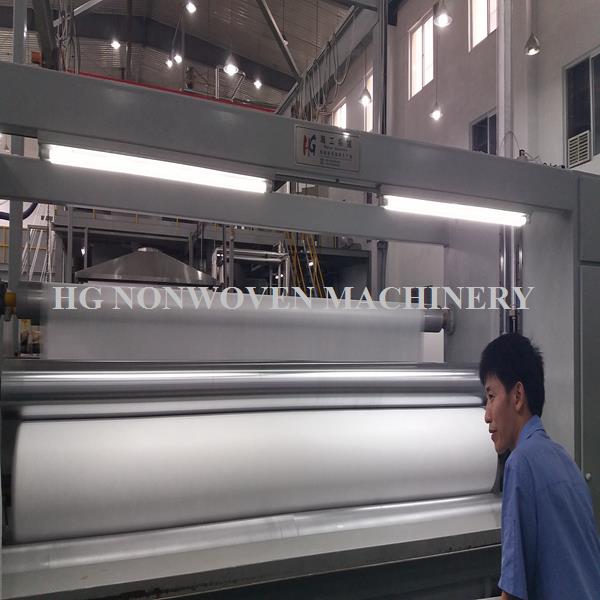
Before we get into motor selection, it's important to have a basic understanding of nonwoven fabric machines. Nonwoven fabrics are made by bonding or interlocking fibers together, rather than weaving or knitting them. There are different types of nonwoven fabric machines, like the Nonwoven Fabri Makinng Machine, PP Spunbond Nonwoven Machine, and PP Spunbond Nonwoven Fabric Machinery. Each has its own unique requirements in terms of motor power, speed, and torque.
Power Requirements
The first thing you need to figure out is how much power your nonwoven fabric machine needs. This depends on several factors, such as the size of the machine, the type of fabric it produces, and the production speed. For example, a larger machine that produces heavy - duty nonwoven fabrics at a high speed will require a more powerful motor than a smaller machine making lightweight fabrics.
To calculate the power requirements, you can look at the machine's specifications provided by the manufacturer. It usually includes information about the maximum power needed for different operations, like feeding, spinning, and bonding. If you're not sure, it's always a good idea to consult with a technical expert. You don't want to end up with a motor that's too weak, as it won't be able to handle the workload, resulting in slow production and potential breakdowns. On the other hand, an overly powerful motor will waste energy and increase your operating costs.
Speed and Torque
Speed and torque are also critical considerations. The speed of the motor determines how fast the nonwoven fabric machine can operate. Different production processes may require different speeds. For instance, the spinning process in a PP Spunbond Nonwoven Machine might need a high - speed motor to ensure the fibers are properly formed.
Torque, on the other hand, is the rotational force that the motor can generate. It's important for starting and stopping the machine, as well as for handling any sudden changes in the workload. A motor with insufficient torque may struggle to start the machine or may stall during operation. You need to find a motor that can provide the right balance of speed and torque for your specific nonwoven fabric machine. Some motors come with adjustable speed and torque settings, which can be really handy if your production requirements change over time.
Motor Type
There are several types of motors available for nonwoven fabric machines, and each has its own advantages and disadvantages.

- AC Motors: These are the most common type of motors used in industrial applications. They are relatively simple and reliable, and they can be easily controlled using variable frequency drives (VFDs). AC motors are a good choice if your nonwoven fabric machine doesn't require extremely high precision or fast acceleration and deceleration.
- DC Motors: DC motors offer better speed control and higher torque at low speeds. They are often used in applications where precise control is needed, such as in some high - end nonwoven fabric finishing processes. However, they are more expensive and require more maintenance compared to AC motors.
- Servo Motors: Servo motors are known for their high precision, fast response, and excellent torque control. They are ideal for nonwoven fabric machines that need to perform complex operations with high accuracy, like in some advanced cutting and printing processes. But they are also the most expensive option.
Efficiency and Energy Consumption
In today's world, energy efficiency is a major concern. A motor that consumes less energy can significantly reduce your operating costs over time. When selecting a motor, look for one with a high efficiency rating. The efficiency of a motor is usually expressed as a percentage, and a higher percentage means less energy is wasted as heat.
Some modern motors are designed with advanced technologies to improve efficiency, such as variable speed drives and energy - saving modes. These features can adjust the motor's performance based on the actual workload, reducing energy consumption without sacrificing productivity.
Environmental Factors
The operating environment of your nonwoven fabric machine can also affect the motor selection. If the machine is located in a dusty or humid environment, you need a motor that is well - protected against dust and moisture. Look for motors with an appropriate Ingress Protection (IP) rating. For example, a motor with an IP54 rating is protected against dust ingress to a large extent and is also protected against water splashes.
Temperature is another important factor. High - temperature environments can cause the motor to overheat, which can shorten its lifespan. In such cases, you may need a motor with better heat dissipation capabilities or a cooling system.
Maintenance and Reliability
No one wants a motor that constantly breaks down and requires a lot of maintenance. When choosing a motor for your nonwoven fabric machine, consider its reliability and the ease of maintenance. Look for motors from reputable manufacturers with a good track record.
Some motors come with built - in diagnostic features that can help you detect potential problems early. This can save you a lot of time and money in the long run. Additionally, make sure that replacement parts are readily available and that there are service technicians in your area who are familiar with the motor.
Cost Considerations
Cost is always a factor when making any purchasing decision. While you don't want to compromise on quality, you also need to stay within your budget. Compare the prices of different motors, taking into account their features, performance, and energy efficiency.
Remember, the initial cost of the motor is not the only cost you need to consider. You also need to factor in the operating costs, maintenance costs, and the cost of any potential downtime. A slightly more expensive motor that is more efficient and reliable may end up being a better investment in the long run.
Conclusion
Selecting the right motor for your nonwoven fabric machine is a complex process that requires careful consideration of multiple factors. You need to balance power, speed, torque, motor type, efficiency, environmental factors, maintenance, and cost to make the best choice. As a nonwoven fabric machine supplier, I'm here to help you every step of the way. If you have any questions or need more information about motor selection for your nonwoven fabric machine, feel free to reach out to us. We can provide you with professional advice and help you find the perfect motor for your specific needs. Let's work together to ensure your nonwoven fabric production runs smoothly and efficiently. Start your procurement negotiation with us and take a step towards enhancing your production capabilities.
References
- General knowledge in the field of nonwoven fabric machine technology and motor science.
- Industry - specific whitepapers on motor selection for industrial applications.


