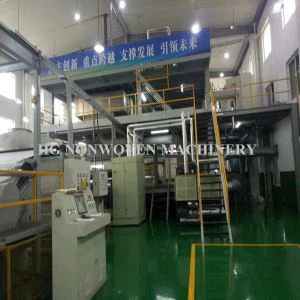
Lubrication is a critical factor in the smooth and efficient operation of non woven fabric machinery. As a reliable supplier of non woven fabric machinery, I understand the importance of proper lubrication to ensure the longevity and high - performance of our equipment. In this blog, I will delve into the requirements for the lubrication of non woven fabric machinery.
1. Lubrication Purpose
The primary purpose of lubrication in non woven fabric machinery is to reduce friction between moving parts. Friction can cause wear and tear on components, leading to increased maintenance costs, reduced efficiency, and even premature failure of the machine. By applying a lubricant, a thin film is created between the moving surfaces, which separates them and minimizes direct contact. This not only reduces friction but also helps to dissipate heat generated during operation.
Another important purpose is to prevent corrosion. Non woven fabric machinery is often exposed to various environmental conditions and chemicals during the manufacturing process. Lubricants can act as a protective barrier, preventing moisture and corrosive substances from coming into contact with the metal surfaces of the machine.
2. Types of Lubricants
- Mineral Oils: These are the most commonly used lubricants in non woven fabric machinery. They are cost - effective and have good lubricating properties. Mineral oils are refined from crude oil and can be formulated to meet different viscosity requirements. For example, in low - speed and heavy - load applications, a higher - viscosity mineral oil may be used to provide sufficient lubrication.
- Synthetic Lubricants: Synthetic oils are designed for more demanding applications. They offer better thermal stability, oxidation resistance, and low - temperature performance compared to mineral oils. In non woven fabric machinery that operates at high speeds or under extreme temperatures, synthetic lubricants can provide better protection and longer service life.
- Greases: Greases are a semi - solid lubricant made by thickening a lubricating oil with a thickener. Greases are ideal for applications where the lubricant needs to stay in place, such as in bearings and gears. They can provide long - term lubrication and are less likely to leak out compared to liquid lubricants.
3. Viscosity Requirements
Viscosity is one of the most important properties of a lubricant. It refers to the resistance of a fluid to flow. The viscosity of the lubricant used in non woven fabric machinery must be carefully selected according to the operating conditions of the machine.
- Low - speed and High - load Applications: In components such as large - scale gears and heavy - duty bearings, a high - viscosity lubricant is required. A high - viscosity lubricant can form a thick film between the moving surfaces, providing sufficient support to withstand the heavy loads. For example, in the roller systems of a Polypropylene Nonwoven Fabric Making Machine, which often operate under high pressure, a high - viscosity lubricant can ensure smooth operation.
- High - speed Applications: For high - speed rotating parts like spindles and motors, a low - viscosity lubricant is more suitable. Low - viscosity lubricants can flow easily and quickly between the moving surfaces, reducing the drag force and heat generation. This helps to keep the temperature of the components within an acceptable range and improves the overall efficiency of the machine.
4. Compatibility with Machine Materials
The lubricant used in non woven fabric machinery must be compatible with the materials of the machine components. Different materials may react differently with lubricants. For example, some lubricants may cause swelling or degradation of rubber seals or plastic parts.
- Metal Components: Most traditional lubricants are well - compatible with metal components such as steel and aluminum. However, in some cases, where there are special alloy materials, it is necessary to choose a lubricant that is specifically formulated for these alloys to ensure optimal performance and prevent corrosion.
- Non - metal Components: When dealing with non - metal components like rubber belts, plastic gears, or synthetic fiber parts, the lubricant must be carefully selected to avoid any chemical reactions. Some synthetic lubricants are designed to be compatible with a wide range of non - metal materials, providing both lubrication and protection.
5. Lubrication Frequency
The frequency of lubrication is crucial for maintaining the performance of non woven fabric machinery. Over - lubrication can lead to excessive heat generation, increased energy consumption, and even damage to the machine due to the accumulation of lubricant. Under - lubrication, on the other hand, can result in increased friction and wear.
The lubrication frequency depends on several factors, including the type of machine, the operating conditions, and the type of lubricant used. For example, in a PP Spun Bond Fabric Making Machine that operates continuously at high speeds, more frequent lubrication may be required compared to a machine that operates intermittently at low speeds.
In general, it is recommended to follow the manufacturer's guidelines for lubrication frequency. Regular monitoring of the lubricant level and quality is also essential. If the lubricant shows signs of contamination or degradation, it should be replaced promptly.
6. Lubrication Methods
There are several lubrication methods available for non woven fabric machinery:
- Dip Lubrication: This is a simple and common method. Components such as gears or bearings are partially or fully immersed in a lubricant reservoir. The lubricant is then carried to the contact surfaces by the movement of the components. Dip lubrication is suitable for low - speed and small - scale applications.
- Oil Mist Lubrication: In this method, a fine mist of lubricant is generated and sprayed onto the moving parts. Oil mist lubrication can provide uniform lubrication and is suitable for high - speed applications. It also helps to cool the components by evaporative cooling.
- Grease Fittings: Grease is applied through grease fittings to specific points on the machine, such as bearings. Grease fittings allow for easy and precise application of grease, ensuring that the lubricant reaches the critical areas.
7. Monitoring and Maintenance
Regular monitoring of the lubrication system is essential to ensure the proper functioning of non woven fabric machinery. This includes checking the lubricant level, quality, and temperature.
- Lubricant Level: The lubricant level should be checked regularly to ensure that there is enough lubricant in the system. Low lubricant levels can lead to insufficient lubrication and increased wear on the components.
- Lubricant Quality: The quality of the lubricant can be assessed by various methods, such as visual inspection, viscosity measurement, and chemical analysis. Contaminated or degraded lubricant should be replaced immediately.
- Temperature Monitoring: Monitoring the temperature of the lubricant and the machine components can provide early warning signs of potential problems. Abnormally high temperatures may indicate excessive friction or a malfunction in the lubrication system.
Conclusion
Proper lubrication is essential for the reliable and efficient operation of non woven fabric machinery. As a non woven fabric machinery supplier, we understand the complexity of lubrication requirements and are committed to providing our customers with high - quality equipment and comprehensive technical support.


If you are interested in our non woven fabric machinery, such as PP Spunbond Nonwoven Machine, and have any questions regarding lubrication or other aspects of the machine, please feel free to contact us for further discussion and potential procurement. We are here to help you make the best choice for your production needs.
References
- "Handbook of Lubrication and Tribology: Volume I: Application and Maintenance" by Bhushan, Bharat
- "Machinery's Handbook" by Industrial Press Inc.