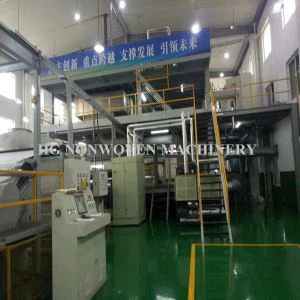
What is the energy consumption of non woven machinery?
As a supplier of non woven machinery, I often encounter inquiries from customers about the energy consumption of our equipment. Understanding the energy consumption of non woven machinery is crucial for both manufacturers and end - users, as it directly impacts operational costs, environmental sustainability, and overall production efficiency.
Factors Affecting Energy Consumption
The energy consumption of non woven machinery is influenced by several key factors. Firstly, the type of non woven process plays a significant role. There are various methods of producing non woven fabrics, such as spunbond, meltblown, and needle punching. Each process has its own unique energy requirements.
For instance, the meltblown process is known to be relatively energy - intensive. In the meltblown process, polymer resin is melted at high temperatures and then extruded through fine nozzles to form microfibers. The high - temperature melting and the air - blowing systems used to attenuate the fibers consume a substantial amount of energy. Our 1.6m Meltblown Nonwoven Fabric Making Machine is designed to optimize the meltblown process, but due to the nature of the technology, it still has a relatively high energy demand compared to some other non woven processes.
Secondly, the scale of production matters. Larger non woven fabric production lines generally consume more energy than smaller ones. A large - scale Non Woven Fabric Production Line with high - speed production capabilities requires more power to drive the motors, heaters, and other components. However, larger lines can also achieve economies of scale in terms of energy per unit of production. That is, as the production volume increases, the energy consumption per square meter of non woven fabric may decrease.
The age and technology level of the machinery also affect energy consumption. Older non woven machines may have less efficient motors, heating elements, and control systems. These outdated components can lead to higher energy waste. In contrast, modern non woven machinery, like our advanced Non Woven Fabric Machine, is equipped with state - of - the - art energy - saving technologies. For example, we use high - efficiency motors that convert electrical energy into mechanical energy with minimal losses. Additionally, our machines are designed with intelligent control systems that can adjust the energy input according to the production requirements in real - time.
Measuring Energy Consumption
To accurately measure the energy consumption of non woven machinery, several parameters need to be considered. The most common unit of measurement is kilowatt - hours (kWh). This unit represents the amount of electrical energy consumed over a period of time.
We usually measure the energy consumption of our non woven machines during the entire production cycle. This includes the start - up phase, the normal production phase, and the shutdown phase. During the start - up phase, the machinery needs to heat up the polymer materials, start the motors, and initialize the control systems. This initial phase often requires a relatively large amount of energy.
In the normal production phase, the energy consumption stabilizes, but it still varies depending on the production speed and the type of non woven fabric being produced. For example, producing a thicker and denser non woven fabric may require more energy than a thinner one, as more polymer material needs to be melted and processed.
The shutdown phase also consumes a certain amount of energy, mainly for cooling down the equipment and shutting off the systems in an orderly manner.
Strategies to Reduce Energy Consumption
As a responsible non woven machinery supplier, we are committed to helping our customers reduce the energy consumption of their production processes. One of the key strategies is to optimize the machine design. We continuously research and develop new technologies to improve the energy efficiency of our non woven machines.
For example, we use insulation materials in our machines to reduce heat loss. In the heating systems of our non woven machinery, proper insulation can prevent the heat from escaping into the surrounding environment, thus reducing the energy required to maintain the desired temperature.
Another strategy is to implement energy - management systems. These systems can monitor the energy consumption of the machinery in real - time and provide feedback to the operators. By analyzing the energy - consumption data, operators can identify areas where energy is being wasted and take appropriate measures to correct them. For instance, if the system detects that a certain motor is consuming more energy than normal, the operator can check for mechanical problems or adjust the motor's operating parameters.
We also offer training programs for our customers' operators. By educating the operators on proper machine operation and energy - saving techniques, we can further reduce the energy consumption of the non woven production process. For example, operators can be trained to start and stop the machines in an energy - efficient manner, and to adjust the production speed according to the actual demand.


Impact of Energy Consumption on the Bottom Line
The energy consumption of non woven machinery has a direct impact on the profitability of non woven fabric manufacturers. High energy costs can significantly increase the production cost per unit of non woven fabric, reducing the profit margin. On the other hand, by reducing energy consumption, manufacturers can lower their production costs and become more competitive in the market.
In addition to the cost - saving aspect, reducing energy consumption also has environmental benefits. As the global awareness of environmental protection increases, non woven fabric manufacturers are under more pressure to reduce their carbon footprint. By using energy - efficient non woven machinery, manufacturers can contribute to a more sustainable future.
Conclusion
In conclusion, the energy consumption of non woven machinery is a complex issue influenced by multiple factors such as the type of non woven process, production scale, machine age, and technology level. As a non woven machinery supplier, we are dedicated to providing our customers with high - quality, energy - efficient machines. Our 1.6m Meltblown Nonwoven Fabric Making Machine, Non Woven Fabric Machine, and Non Woven Fabric Production Line are designed with the latest energy - saving technologies to help our customers reduce their energy costs and environmental impact.
If you are interested in learning more about our non woven machinery and how we can help you optimize your energy consumption, please feel free to contact us for a detailed discussion. We look forward to working with you to achieve more efficient and sustainable non woven fabric production.
References
- Smith, J. (2020). Energy Efficiency in Industrial Manufacturing. Journal of Industrial Engineering, 35(2), 123 - 135.
- Brown, A. (2019). Non Woven Fabric Production: Processes and Technologies. Textile Research Journal, 45(3), 201 - 215.