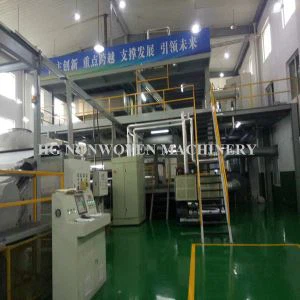
Hey there! As a supplier of Sms Nonwoven Machines, I often get asked about the ins and outs of temperature control in these machines. So, I thought I'd take a few minutes to break it down for you.
Why Temperature Control Matters
First off, let's talk about why temperature control is such a big deal in a Sms Nonwoven Machine. The SMS (Spunbond - Meltblown - Spunbond) process involves melting polymer pellets and extruding them through spinnerets to form fibers. These fibers are then laid down to create a nonwoven fabric.
The temperature at each stage of this process can significantly impact the quality of the final product. If the temperature is too high, the polymer may degrade, leading to weaker fibers and a lower - quality fabric. On the other hand, if the temperature is too low, the polymer won't melt properly, resulting in uneven fiber formation and a less consistent fabric.
Temperature Zones in a Sms Nonwoven Machine
A Sms Nonwoven Machine typically has several temperature - controlled zones, each with a specific function.
1. Extruder Zone
The extruder is where the polymer pellets are melted. This zone usually has a high temperature, often ranging from 180°C to 300°C, depending on the type of polymer being used. For example, polypropylene (PP), which is commonly used in SMS nonwoven fabrics, has a melting point around 160 - 170°C, but we need to heat it a bit higher in the extruder to ensure proper flow.
Maintaining a stable temperature in the extruder is crucial. Fluctuations can cause variations in the melt viscosity, which in turn affects the fiber diameter and the overall quality of the nonwoven fabric.
2. Spinneret Zone
The spinneret is the part of the machine where the molten polymer is forced through tiny holes to form fibers. The temperature in this zone needs to be carefully regulated to ensure that the fibers are formed evenly. If the temperature here is too high, the fibers may be too thin and break easily. If it's too low, the fibers may be thick and uneven.
3. Quenching Zone
After the fibers are formed, they need to be cooled down quickly in the quenching zone. This is usually done using air or water. The temperature in the quenching zone affects the crystallization of the polymer in the fibers. A proper cooling rate helps to develop the right mechanical properties in the fibers, such as strength and elasticity.
4. Bonding Zone
In the bonding zone, the fibers are bonded together to form a fabric. This can be done through thermal bonding, where heat is applied to the fibers to make them stick together. The temperature in this zone determines the strength of the bond between the fibers. If the temperature is too low, the bond may be weak, and the fabric may fall apart easily. If it's too high, the fabric may become brittle.
Temperature Control Methods
There are several methods used to control the temperature in a Sms Nonwoven Machine.
1. Heating Elements
Most machines use electric heating elements to raise the temperature in the extruder and other zones. These elements can be controlled precisely using temperature sensors and controllers. The sensors measure the actual temperature in the zone, and the controller adjusts the power supplied to the heating elements to maintain the desired temperature.
2. Cooling Systems
As I mentioned earlier, cooling is also an important part of the process. Air - cooled and water - cooled systems are commonly used in the quenching zone. These systems can be adjusted to control the cooling rate and the final temperature of the fibers.
Impact of Temperature on Product Quality
The quality of the SMS nonwoven fabric is directly related to the temperature control in the machine. Here are some of the key quality parameters affected by temperature:
1. Fiber Diameter
The temperature in the spinneret zone has a major impact on the fiber diameter. Higher temperatures generally result in thinner fibers, while lower temperatures lead to thicker fibers. A consistent fiber diameter is important for the uniformity and strength of the nonwoven fabric.
2. Tensile Strength
The bonding temperature affects the tensile strength of the fabric. A proper bonding temperature ensures that the fibers are firmly bonded together, resulting in a fabric with good tensile strength. If the bonding temperature is incorrect, the fabric may have low tensile strength and may tear easily.
3. Softness
The temperature in the cooling and bonding zones can also affect the softness of the fabric. A slower cooling rate and a lower bonding temperature can result in a softer fabric, which is desirable for applications such as medical wipes and baby diapers.
Our Sms Nonwoven Machines
We offer a range of high - quality SMS Nonwoven Fabric Machine. Our machines are equipped with advanced temperature control systems that ensure precise and stable temperature regulation in all zones.
Our SS PP Spunbond Nonwoven Fabric Making Machine is designed to produce high - quality spunbond nonwoven fabrics with excellent temperature control. And our Composite Nonwoven Fabric Line is capable of creating various types of composite nonwoven fabrics with consistent quality.


Conclusion
Temperature control is a critical aspect of the SMS nonwoven manufacturing process. It affects every stage of production, from fiber formation to fabric bonding, and ultimately determines the quality of the final product.
If you're in the market for a Sms Nonwoven Machine and want to ensure that you get the best temperature control and product quality, we'd love to talk to you. Whether you're a small - scale manufacturer or a large - scale industrial operation, our machines can meet your needs. Reach out to us to start a discussion about your specific requirements and how we can help you achieve your production goals.
References
- "Nonwoven Fabric: Structure, Properties and Applications" by Xungai Wang
- "Handbook of Nonwoven Filter Media" by Rajiv K. Gupta