

Medical nonwoven materials have revolutionized the healthcare industry, offering a wide range of benefits such as cost - effectiveness, disposability, and high performance. As a supplier of nonwoven for medical use, I've often been asked whether these materials can be used in orthopedic applications. In this blog, I'll explore this question in detail, looking at the properties of medical nonwovens, the requirements of orthopedic applications, and potential use - cases.
Properties of Medical Nonwoven Materials
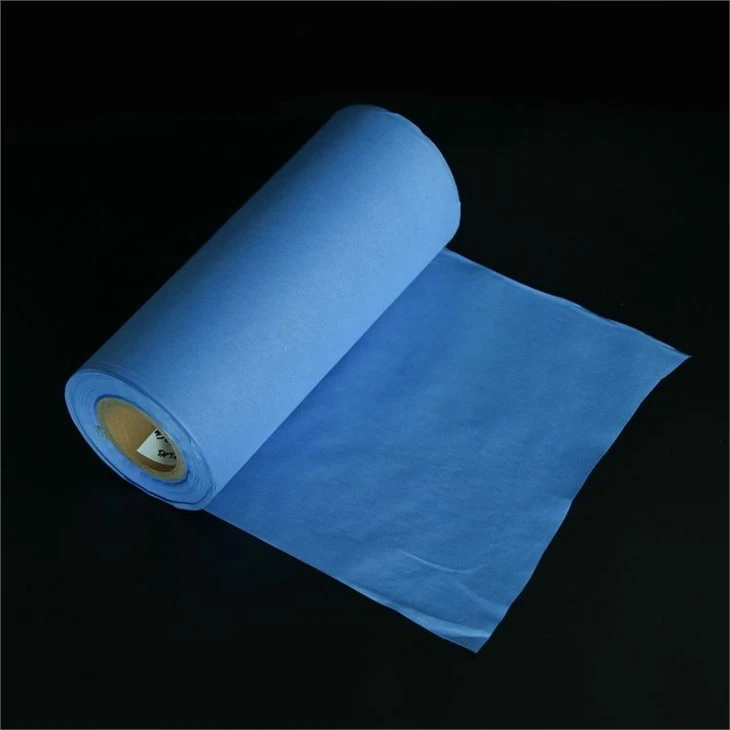
Medical nonwovens come in various types, including spunbond, melt - blown, and their combinations like SMS (spunbond - meltblown - spunbond). These materials possess several key properties that make them suitable for medical applications.
First, they offer excellent barrier protection. Anti - static 55gsm SMS BFE99 Non Woven Fabirc For Medical Products is a prime example. With a high BFE (Bacterial Filtration Efficiency) of 99%, it can effectively prevent the penetration of bacteria and other microorganisms. This is crucial in a medical setting where the risk of infection is a constant concern.
Second, nonwovens are breathable. They allow air and moisture to pass through, which helps in maintaining a comfortable environment for the patient. This is especially important for products that are in contact with the skin for extended periods, such as surgical gowns and wound dressings.
Third, they are lightweight and flexible. These characteristics make them easy to handle during manufacturing processes and comfortable for patients to wear. For instance, SMS Spunbond Nonwoven Fabric For Face Masks is not only effective in filtering particles but also light enough for long - term use without causing excessive discomfort.
Requirements of Orthopedic Applications
Orthopedic applications have their own set of specific requirements. First, mechanical strength is of utmost importance. Orthopedic devices and materials need to withstand significant forces, whether it's the weight of the patient or the stress during movement. For example, in the case of orthopedic braces or splints, the material must be strong enough to support the affected limb without breaking or deforming.
Second, biocompatibility is essential. The material should not cause any adverse reactions when in contact with the body tissues. It should be non - toxic and non - allergenic to ensure the safety and well - being of the patient.
Third, conformability is required. Orthopedic materials need to fit well around the body part they are intended to support or treat. This helps in providing proper support and comfort to the patient.

Potential Use - Cases of Medical Nonwovens in Orthopedics
Wound Dressings
In orthopedic surgeries, wounds are often created, and proper wound management is crucial for a successful recovery. Medical nonwovens can be used as wound dressings. Their barrier properties prevent external contaminants from entering the wound, reducing the risk of infection. The breathability helps in keeping the wound dry and promoting the healing process. For example, a nonwoven dressing can be designed to absorb exudate from the wound while maintaining a moist environment, which is beneficial for cell growth and tissue repair.
Orthopedic Braces and Splints
Medical nonwovens can be incorporated into orthopedic braces and splints. They can be used as the outer layer to provide a comfortable and breathable surface for the patient. Additionally, with proper reinforcement techniques, nonwovens can contribute to the overall mechanical strength of the brace or splint. For example, a combination of a strong nonwoven fabric with elastic elements can create a brace that provides support while allowing for some flexibility during movement.
Surgical Draps
During orthopedic surgeries, surgical draps are used to create a sterile field. SMS PP Spunbond Nonwoven Fabric For Surgical Gowns can also be used as surgical draps. Its high - level barrier protection ensures that the surgical area remains free from contaminants. The lightweight and flexible nature of the nonwoven fabric make it easy to handle and position during the surgery.
Challenges and Considerations
While medical nonwovens have great potential in orthopedic applications, there are also some challenges and considerations.
One challenge is improving the mechanical strength. Although nonwovens have certain levels of strength, they may not be sufficient for some high - stress orthopedic applications. Research and development efforts are needed to enhance the mechanical properties of nonwovens, perhaps through the use of composite materials or advanced manufacturing techniques.
Another consideration is the long - term stability of the nonwoven materials in the body. Since orthopedic treatments often involve long - term use of devices, the nonwoven materials need to maintain their properties over an extended period. This requires further testing and evaluation to ensure their durability and performance.
Conclusion
In conclusion, medical nonwovens do have the potential to be used in orthopedic applications. Their unique properties such as barrier protection, breathability, and flexibility make them suitable for a variety of orthopedic use - cases, including wound dressings, braces, and surgical draps. However, challenges such as improving mechanical strength and ensuring long - term stability need to be addressed.
As a supplier of nonwoven for medical use, I am committed to working with the orthopedic industry to explore and develop new solutions. If you are interested in using our nonwoven materials for orthopedic applications or have any questions about our products, please feel free to contact us for procurement and further discussions.
References
- "Medical Textiles: Design and Applications" by Xungai Wang and Walter C. Smith.
- "Orthopedic Biomaterials in Research and Practice" edited by V. K. Gupta and M. M. Sharma.
- Journal articles on nonwoven materials and orthopedic applications from "Journal of Biomedical Materials Research" and "Medical Engineering & Physics".


