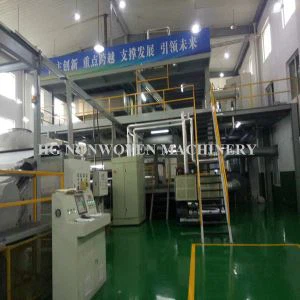
As a supplier of SMS Non Woven Fabric, I am often asked whether this material can be used for protective clothing. In this blog post, I will explore the properties of SMS Non Woven Fabric and its suitability for protective clothing applications.
Understanding SMS Non Woven Fabric
SMS Non Woven Fabric is a composite material made up of three layers: Spunbond - Meltblown - Spunbond. The outer spunbond layers provide strength, durability, and a smooth surface, while the middle meltblown layer offers excellent filtration properties. This combination of layers gives SMS Non Woven Fabric unique characteristics that make it an attractive option for various industries.
The spunbond layers are produced by extruding molten polypropylene (PP) through a spinneret to form continuous filaments, which are then laid down on a conveyor belt and bonded together. This process results in a fabric with high tensile strength and good tear resistance. On the other hand, the meltblown layer is created by extruding molten PP through a die with fine holes, and then using high - speed hot air to attenuate the filaments into ultra - fine fibers. These ultra - fine fibers form a dense web that can effectively capture small particles.
Properties of SMS Non Woven Fabric Relevant to Protective Clothing
1. Filtration Efficiency
One of the most important properties for protective clothing is the ability to filter out harmful particles. The meltblown layer in SMS Non Woven Fabric has a high surface area and a fine pore structure, which enables it to trap particles such as dust, bacteria, and viruses. Studies have shown that SMS Non Woven Fabric can achieve high filtration efficiencies, especially for particles in the sub - micron range. For example, in some applications, it can filter out more than 95% of particles with a size of 0.3 microns. This makes it suitable for use in protective clothing in environments where there is a risk of exposure to airborne contaminants, such as in medical settings or industrial workplaces.
2. Barrier Properties
In addition to filtration, protective clothing needs to provide a barrier against liquids. SMS Non Woven Fabric has good liquid - repellent properties due to the hydrophobic nature of polypropylene. The dense structure of the fabric prevents liquids from penetrating through, protecting the wearer from contact with potentially hazardous substances such as blood, chemicals, or bodily fluids. This is crucial in medical and chemical industries, where workers may come into contact with infectious materials or corrosive chemicals.
3. Breathability
Wearing comfort is also an important factor in protective clothing. SMS Non Woven Fabric offers a certain degree of breathability. The porous structure of the fabric allows air to pass through, reducing the build - up of heat and moisture inside the clothing. This helps to keep the wearer dry and comfortable during long - term use, which is essential for maintaining productivity and compliance with safety regulations.
4. Strength and Durability
The outer spunbond layers of SMS Non Woven Fabric give it good mechanical strength. It can withstand normal handling and movement without tearing or fraying easily. This is important for protective clothing, as it needs to maintain its integrity during use. Whether it is being worn in a busy hospital ward or a demanding industrial environment, the fabric should be able to hold up under stress.
Applications of SMS Non Woven Fabric in Protective Clothing
1. Medical Protective Clothing
In the medical field, SMS Non Woven Fabric is widely used in the production of surgical gowns, isolation gowns, and face masks. Surgical gowns made from SMS Non Woven Fabric provide a barrier against blood and other bodily fluids during surgical procedures, protecting both the patient and the medical staff. Isolation gowns are used to prevent the spread of infectious diseases in hospitals, and the high filtration and barrier properties of SMS Non Woven Fabric make them an ideal choice. Face masks with SMS Non Woven Fabric layers can effectively filter out airborne pathogens, reducing the risk of infection.
2. Industrial Protective Clothing
In industrial settings, such as chemical manufacturing, mining, and construction, workers are often exposed to various hazards. SMS Non Woven Fabric can be used to make protective suits that protect against dust, chemicals, and other contaminants. For example, in chemical plants, workers may wear SMS - based protective clothing to prevent contact with toxic chemicals. In mining operations, the fabric can protect against dust inhalation and abrasion.
3. Cleanroom Clothing
Cleanrooms are used in industries such as semiconductor manufacturing, pharmaceuticals, and biotechnology, where a high level of cleanliness is required. SMS Non Woven Fabric is used to make cleanroom suits because of its ability to filter out particles and its low particle - shedding properties. This helps to maintain the cleanliness of the cleanroom environment and prevent contamination of the products being manufactured.
Comparison with Other Non Woven Fabrics
1. PP Spunbond Non Woven Fabric
PP Spunbond Non Woven Fabric is a single - layer non - woven fabric made from spunbonded polypropylene filaments. While it has good strength and durability, its filtration efficiency is relatively low compared to SMS Non Woven Fabric. PP Spunbond Non Woven Fabric is more suitable for applications where strength and cost - effectiveness are the main concerns, such as in packaging or agricultural covers. In contrast, SMS Non Woven Fabric's superior filtration and barrier properties make it a better choice for protective clothing.
2. PP Laminated Nonwoven Fabric
PP Laminated Nonwoven Fabric is a non - woven fabric that is laminated with other materials, such as films or membranes, to enhance its properties. Although it can also provide good barrier properties, the lamination process may increase the cost and reduce the breathability of the fabric. SMS Non Woven Fabric, with its integrated structure, offers a good balance between filtration, barrier, and breathability without the need for additional lamination in many cases.
Limitations and Considerations
While SMS Non Woven Fabric has many advantages for protective clothing, there are also some limitations. For example, it may not be suitable for use in extremely high - temperature environments, as polypropylene has a relatively low melting point. In addition, repeated washing or exposure to harsh chemicals may degrade the performance of the fabric over time.
When using SMS Non Woven Fabric for protective clothing, it is important to consider the specific requirements of the application. Factors such as the type of hazards, the duration of use, and the comfort needs of the wearer should all be taken into account. Proper sizing and fit of the protective clothing are also crucial to ensure maximum protection.
Conclusion
In conclusion, SMS Non Woven Fabric can indeed be used for protective clothing. Its unique combination of filtration efficiency, barrier properties, breathability, and strength makes it suitable for a wide range of protective applications in the medical, industrial, and cleanroom sectors. Compared to other non - woven fabrics, it offers a good balance of performance and cost - effectiveness.


If you are in the market for high - quality SMS Non Woven Fabric for your protective clothing needs, or if you want to learn more about SMS PP Non Woven Fabric, please feel free to contact us. We are dedicated to providing the best products and services to meet your specific requirements. Let's start a conversation about how we can work together to ensure the safety and comfort of your workers or patients.
References
- Brown, A. (2018). Non - woven fabrics for protective applications. Journal of Textile Science and Technology, 25(3), 123 - 135.
- Chen, L., & Zhang, H. (2020). Filtration performance of SMS non - woven fabrics. International Journal of Environmental Science and Technology, 17(5), 3456 - 3464.
- Smith, J. (2019). Protective clothing materials: A review. Clothing and Textiles Research Journal, 37(2), 101 - 115.