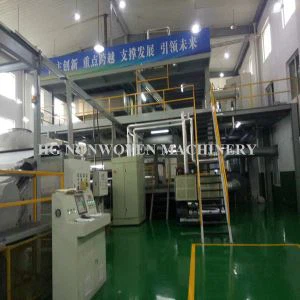
Hey there! As a supplier of Composite Nonwoven Fabric Machines, I often get asked about the automation level of these machines. In this blog post, I'll break down what the automation level means, how it impacts the production of composite nonwoven fabrics, and why it's crucial for your business.
What Does Automation Level Mean?
When we talk about the automation level of a Composite Nonwoven Fabric Machine, we're referring to how much of the production process is carried out without human intervention. A highly automated machine can perform tasks like material feeding, web forming, bonding, and cutting with minimal human input. On the other hand, a less automated machine might require more manual labor at various stages of the production process.
Benefits of High Automation
1. Increased Efficiency
One of the most significant advantages of a highly automated Composite Nonwoven Fabric Machine is the increase in efficiency. These machines can work around the clock without getting tired, which means you can produce more fabric in less time. For example, a fully automated Composite PP Non Woven Fabric Machine can continuously feed raw materials, form the web, and bond the layers together at a high speed, resulting in a much higher output compared to a semi - automated machine.
2. Consistent Quality
Automation ensures that each step of the production process is carried out precisely the same way every time. This consistency leads to a more uniform quality of the composite nonwoven fabric. With automated controls, the machine can maintain the right temperature, pressure, and speed during bonding, which is crucial for producing high - quality fabrics. For instance, in a Melt Blown Nonwoven Machine, automation helps in controlling the melt - blowing process to create fine fibers with consistent diameters, which is essential for the fabric's filtration and barrier properties.
3. Reduced Labor Costs
By automating the production process, you can significantly reduce the number of workers required on the production line. This not only saves on labor costs but also minimizes the risk of human error. Instead of having multiple workers performing repetitive tasks, an automated machine can handle these tasks with greater precision and speed.
4. Safety
Automated machines are designed with safety features that protect workers from potential hazards. For example, automated feeding systems can reduce the risk of workers coming into contact with sharp edges or hot surfaces. In addition, sensors and emergency stop buttons are often integrated into the machine's automation system to ensure the safety of the operators.
Components of Automation in Composite Nonwoven Fabric Machines
1. Material Handling
Automated material handling systems are used to feed the raw materials into the machine. These systems can include conveyor belts, hoppers, and dosing units. For example, in a SMS Nonwoven Machine, the automation system can precisely control the amount of polypropylene or other polymers being fed into the extruders, ensuring a consistent mix for the spun - bond and melt - blown layers.
2. Web Forming
Web forming is a critical step in the production of composite nonwoven fabrics. Automated web forming systems use various techniques such as carding, air - laying, or spun - bonding to create a uniform web of fibers. These systems can adjust the speed, tension, and density of the web based on the desired properties of the final fabric.
3. Bonding
There are different bonding methods used in composite nonwoven fabric production, such as thermal bonding, chemical bonding, and ultrasonic bonding. Automated bonding systems can control the temperature, pressure, and duration of the bonding process to ensure a strong and uniform bond between the layers. For example, in a thermal bonding machine, the automation system can monitor and adjust the temperature of the heated rollers to achieve the optimal bonding strength.
4. Cutting and Winding
Once the fabric is formed and bonded, it needs to be cut to the desired length and wound onto rolls. Automated cutting and winding systems can perform these tasks with high precision. The cutting blades can be adjusted automatically based on the thickness and width of the fabric, and the winding speed can be controlled to ensure a tight and uniform roll.
Determining the Right Automation Level for Your Business
The right automation level for your Composite Nonwoven Fabric Machine depends on several factors, including your production volume, the complexity of the fabric you want to produce, and your budget.
1. Production Volume
If you have a high - volume production requirement, a highly automated machine is usually the best choice. These machines can handle large - scale production with ease and efficiency. On the other hand, if you have a small - scale production or produce a variety of fabrics in small quantities, a semi - automated machine might be more suitable.
2. Fabric Complexity
If you're producing complex composite nonwoven fabrics with multiple layers or special properties, a higher level of automation is necessary. Automated machines can precisely control the production process to ensure the quality and consistency of these fabrics. For simple fabrics, a less automated machine might be sufficient.


3. Budget
Automated machines generally come with a higher price tag than semi - automated ones. You need to consider your budget and the return on investment when choosing the automation level. While a highly automated machine might require a larger upfront investment, it can save you money in the long run through increased efficiency and reduced labor costs.
Conclusion
The automation level of a Composite Nonwoven Fabric Machine plays a crucial role in the efficiency, quality, and cost - effectiveness of your production process. Whether you're a small - scale producer or a large - scale manufacturer, choosing the right automation level can make a significant difference in your business.
If you're interested in learning more about our Composite Nonwoven Fabric Machines and finding the best automation solution for your needs, feel free to reach out to us. We're here to help you make the right choice and take your nonwoven fabric production to the next level.
References
- Nonwoven Fabrics: Principles, Production, Properties, Applications, and Modeling. By Tomasz Kudryavtsev.
- Handbook of Nonwovens. Edited by Richard K. Russo.