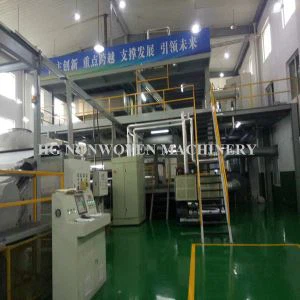
Hey there! As a supplier of Pp Nonwoven Machines, I've seen firsthand how different factors can impact the raw materials used in these machines. One factor that often gets overlooked but can have a significant effect is humidity. In this blog, I'm going to dive into what humidity is, how it affects the raw materials in a Pp Nonwoven Machine, and what you can do to mitigate these effects.
First off, let's talk about what humidity is. Humidity refers to the amount of water vapor present in the air. It's usually expressed as a percentage, known as relative humidity. For example, if the relative humidity is 50%, it means the air is holding half of the maximum amount of water vapor it can hold at that temperature.
Now, let's get into how humidity affects the raw materials used in a Pp Nonwoven Machine. Polypropylene (PP), which is the main raw material for these machines, is a hygroscopic material to some extent. That means it can absorb and retain moisture from the surrounding environment.
Impact on Material Properties
When PP absorbs moisture due to high humidity, its physical and chemical properties can change. One of the most noticeable changes is in its melt flow index (MFI). The MFI is a measure of how easily a polymer can flow when melted. Higher humidity can cause the PP to absorb water, which can lead to a decrease in the MFI. This means the melted PP may not flow as smoothly through the machine's spinnerets, resulting in uneven fiber formation.
Another property that can be affected is the tensile strength of the nonwoven fabric produced. Moisture absorption can weaken the intermolecular bonds in the PP, reducing the fabric's overall strength. This can lead to issues such as tearing or breaking during the production process or in the final product.
Processing Challenges
High humidity can also create processing challenges in a Pp Nonwoven Machine. For instance, the presence of moisture can cause the PP pellets to clump together. These clumps can clog the feeding system of the machine, disrupting the continuous flow of raw materials. This not only slows down the production process but can also damage the machine's components if the clog is not cleared in time.
In addition, moisture in the PP can cause foaming during the melting process. When the water in the PP turns into steam at high temperatures, it creates bubbles in the molten polymer. These bubbles can create defects in the nonwoven fabric, such as holes or uneven thickness.
Quality of the Final Product
The quality of the final nonwoven fabric is directly affected by the humidity levels during production. As mentioned earlier, uneven fiber formation and reduced tensile strength can lead to a lower-quality product. The fabric may have a rough surface, inconsistent texture, or poor durability.
For applications like Female Hygiene Nonwoven Fabric Production Line, where the fabric needs to be soft, absorbent, and strong, any quality issues caused by humidity can be a deal-breaker. Similarly, in products made using Double Beams Pp Spunbond Nonwoven Fabric Making Machine or PP Spunbond Non Woven Fabric Production Line, high humidity can result in sub - standard output.
Mitigating the Effects of Humidity
So, what can you do to minimize the impact of humidity on the raw materials in a Pp Nonwoven Machine?


Storage Conditions
Proper storage of the PP raw materials is crucial. Store the PP pellets in a dry environment with low humidity. You can use dehumidifiers in the storage area to keep the relative humidity at an optimal level, usually below 40 - 50%. Also, make sure the storage containers are sealed tightly to prevent moisture from getting in.
Pre - drying the Raw Materials
Before feeding the PP pellets into the machine, it's a good idea to pre - dry them. This can be done using a desiccant dryer or a hopper dryer. Pre - drying removes the moisture from the pellets, ensuring that the PP has the right properties for processing.
Environmental Control in the Production Area
Maintaining a controlled environment in the production area is essential. Install air conditioning and dehumidification systems to keep the humidity levels stable. This can help prevent moisture absorption by the raw materials during the production process.
Conclusion
In conclusion, humidity can have a significant impact on the raw materials used in a Pp Nonwoven Machine. It can affect the material properties, create processing challenges, and lower the quality of the final product. However, by understanding these effects and taking appropriate measures to control humidity, you can ensure smooth production and high - quality nonwoven fabrics.
If you're in the market for a Pp Nonwoven Machine or have any questions about how to deal with humidity in your production process, don't hesitate to reach out. We're here to help you get the most out of your nonwoven production.
References
- ASTM D1238 - Standard Test Method for Melt Flow Rates of Thermoplastics by Extrusion Plastometer.
- Polymer Science textbooks covering the properties of polypropylene and the effects of moisture on polymers.