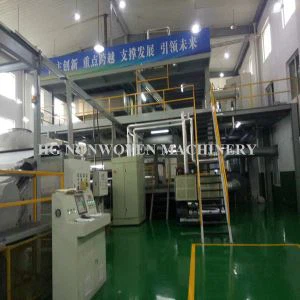
What is the pressure control of a Composite Nonwoven Fabric Machine?
As a seasoned supplier of Composite Nonwoven Fabric Machines, I've witnessed firsthand the pivotal role that pressure control plays in the production of high - quality nonwoven fabrics. In this blog, I'll delve into the nuances of pressure control in these machines, exploring its significance, the factors affecting it, and the methods to optimize it.
The Significance of Pressure Control
Pressure control is the cornerstone of a Composite Nonwoven Fabric Machine's operation. It directly influences the fabric's physical properties, such as its density, thickness, strength, and uniformity. Precise pressure control ensures that the fibers are bonded together effectively, creating a fabric with consistent quality throughout its surface area.
For instance, in the production of medical nonwoven fabrics, accurate pressure control is essential. These fabrics need to have a specific density and strength to provide the necessary protection and filtration. If the pressure is too low, the fibers may not bond properly, resulting in a weak and porous fabric that fails to meet the required standards. On the other hand, excessive pressure can damage the fibers, leading to a brittle and less - flexible fabric.
In the automotive industry, nonwoven fabrics are used for various applications, including interior linings and sound insulation. Pressure control in the manufacturing process determines the fabric's ability to absorb sound and its durability. A well - controlled pressure ensures that the fabric has the right combination of density and flexibility, making it suitable for these demanding applications.
Factors Affecting Pressure Control
Several factors can affect the pressure control in a Composite Nonwoven Fabric Machine. Understanding these factors is crucial for maintaining optimal pressure levels and ensuring consistent fabric quality.
-
Fiber Type and Characteristics
Different types of fibers have varying physical properties, such as length, diameter, and surface friction. For example, polyester fibers are generally stiffer than polypropylene fibers. These differences can influence how the fibers interact with each other under pressure. Fibers with higher surface friction may require more pressure to bond effectively, while longer fibers may need to be handled with more care to avoid entanglement during the pressure - bonding process. -
Machine Speed
The speed at which the Composite Nonwoven Fabric Machine operates can have a significant impact on pressure control. As the machine speed increases, the time available for the fibers to be compressed and bonded decreases. This means that higher pressures may be required to achieve the same level of bonding as at lower speeds. However, increasing the pressure too much can lead to other issues, such as excessive wear and tear on the machine components. -
Temperature
Temperature is another critical factor in pressure control. Heat can soften the fibers, making them more pliable and easier to bond. In some Composite Nonwoven Fabric Machines, heat is applied in conjunction with pressure to improve the bonding process. However, the temperature needs to be carefully controlled, as overheating can cause the fibers to melt or degrade, while insufficient heat may result in poor bonding. -
Machine Design and Components
The design of the Composite Nonwoven Fabric Machine and the quality of its components also play a role in pressure control. For example, the rollers or calenders used to apply pressure need to be precisely machined and aligned to ensure uniform pressure distribution across the fabric. Any misalignment or wear in these components can lead to uneven pressure, resulting in inconsistent fabric quality.
Methods of Pressure Control
To achieve accurate pressure control in a Composite Nonwoven Fabric Machine, several methods can be employed.
-
Hydraulic Systems
Hydraulic systems are commonly used in Composite Nonwoven Fabric Machines to apply and control pressure. These systems use a fluid, typically oil, to transmit force from a pump to the pressure - applying components, such as rollers or calenders. Hydraulic systems offer precise control over pressure levels, allowing operators to adjust the pressure according to the specific requirements of the fabric being produced. They can also provide a high amount of force, making them suitable for heavy - duty applications. -
Pneumatic Systems
Pneumatic systems use compressed air to apply pressure. They are often used in smaller - scale Composite Nonwoven Fabric Machines or in applications where a lower level of pressure is required. Pneumatic systems are relatively simple and cost - effective, but they may not offer the same level of precision as hydraulic systems. However, advancements in pneumatic technology have improved their accuracy and control capabilities in recent years. -
Electronic Control Systems
Modern Composite Nonwoven Fabric Machines are increasingly equipped with electronic control systems. These systems use sensors to monitor the pressure at various points in the machine and adjust the pressure - applying components accordingly. Electronic control systems can provide real - time feedback and precise control, ensuring that the pressure remains within the desired range throughout the production process. They can also be integrated with other machine functions, such as speed and temperature control, to optimize the overall manufacturing process.
Optimizing Pressure Control for Different Fabric Types
Different types of nonwoven fabrics require different pressure control settings. Here are some examples of how pressure control can be optimized for specific fabric types:
-
PET Non Woven Fabric
PET Non Woven Fabric Machine is used to produce PET nonwoven fabrics, which are known for their high strength and durability. These fabrics are often used in applications such as geotextiles and industrial filters. To achieve the best results, a relatively high pressure is usually required to ensure proper bonding of the PET fibers. However, the pressure needs to be carefully controlled to avoid damaging the fibers. The temperature during the pressure - bonding process also needs to be optimized, as PET fibers have a relatively high melting point. -
SMS Non Woven Fabric
The SMS Non Woven Fabric Making Machine produces SMS (Spunbond - Meltblown - Spunbond) nonwoven fabrics, which are widely used in the medical and hygiene industries. These fabrics require a balance between pressure and flexibility. A moderate pressure is applied to bond the layers together while maintaining the fabric's softness and breathability. The pressure control needs to be adjusted to ensure that the meltblown layer, which provides the filtration properties, is not compressed too much, as this can reduce its effectiveness.

-
PP Non Woven Fabric
PP Non Woven Fabric Making Machinery is used to produce PP nonwoven fabrics, which are lightweight and cost - effective. These fabrics are used in a variety of applications, including packaging and agricultural covers. A relatively low to moderate pressure is typically sufficient for bonding PP fibers. The pressure control should be adjusted based on the specific requirements of the application, such as the fabric's thickness and strength.
Conclusion
Pressure control is a critical aspect of operating a Composite Nonwoven Fabric Machine. It determines the quality, properties, and performance of the nonwoven fabrics produced. By understanding the factors that affect pressure control, employing appropriate control methods, and optimizing the settings for different fabric types, manufacturers can ensure consistent production of high - quality nonwoven fabrics.
If you're in the market for a Composite Nonwoven Fabric Machine or need advice on pressure control and fabric production, we're here to help. Our team of experts has extensive experience in the nonwoven fabric industry and can provide you with the best solutions for your specific needs. Contact us to start a discussion about your requirements and explore how our machines can enhance your production process.
References
- "Nonwoven Fabric Technology and Applications" by X. M. Chen
- "Handbook of Nonwoven Fabrics" edited by S. Ramakrishna